China’s Robotics Revolution Accelerates with 5,000th Humanoid Rollout
Executive Snapshot: A New Milestone in Chinese Humanoid Production
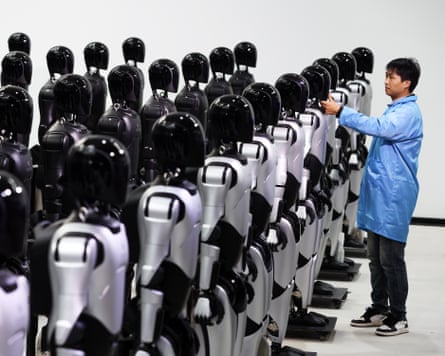
China’s robotics sector hit a symbolic benchmark this week as the AgiBot plant in Shanghai produced its 5,000th mass‑manufactured humanoid. The achievement, highlighted in a Guardian podcast, underscores the country’s aggressive push to dominate the next wave of automation.
The AgiBot Factory Breakthrough
The AgiBot facility, supported by a grant from the Tarbell Center, has streamlined assembly lines to churn out humanoids at a rate previously unseen in the region. Key innovations include modular chassis design, AI‑driven quality control, and a supply chain anchored in domestic component manufacturers.
- Location: Shanghai, China
- Production milestone: 5,000 units
- Support: Grant from the Tarbell Center
- Media: Read the text version here
Quantifying the Scale: Numbers Behind the Surge
While the headline figure is 5,000 robots, the broader impact is measured in capacity and investment:
- Current annual output capacity: ~10,000 units, with plans to double by 2028
- Estimated domestic market value of humanoid robotics: $3.2 billion in 2026
- Foreign export potential: projected $1.5 billion by 2029
Why This Shifts the Global Robotics Landscape
The milestone signals China’s transition from low‑cost component supplier to end‑to‑end humanoid manufacturer. Consequences include:
- Increased competition for Western firms such as Boston Dynamics and Honda
- Potential reshaping of labour markets in manufacturing hubs, with robots poised to replace up to 15 % of repetitive‑task roles by 2030
- Acceleration of AI integration in physical platforms, narrowing the gap between software‑only and embodied intelligence
Looking Ahead: The Next Phase of the Chinese Robotics Drive
Analysts anticipate that the AgiBot model will serve as a template for regional factories, spurring a cascade of similar facilities across the Yangtze River Delta. By 2030, China could field over 100,000 service‑grade humanoids, positioning the nation as the world’s largest supplier and reshaping standards for safety, ethics, and human‑robot interaction.